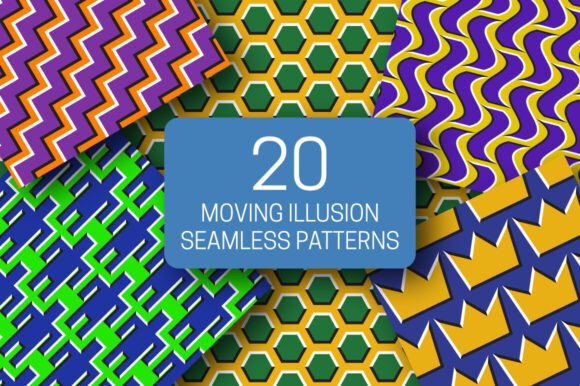
20 Moving Illusion Patterns
Are you looking for a creative way to add movement and visual interest to your design projects? The 20 Moving Illusion Patterns offer an exciting solution. These seamless optical illusion textures are designed to create a dizzying, dynamic effect that can transform static designs into visually engaging experiences.
Whether you're working on branding materials, website backgrounds, or print media, these patterns provide a unique way to capture attention and evoke emotion. With 20 different files in the archive, each one is crafted to deliver a distinct visual impact while maintaining versatility across various applications.
What Are Moving Illusion Patterns?
Moving illusion patterns are optical illusions that simulate motion without actual movement. They rely on cleverly arranged shapes, lines, and colors to trick the eye into perceiving motion. These effects can be used to create a sense of depth, energy, or complexity within a design.
The 20 Moving Illusion Patterns package includes 20 EPS and 10 file formats, making them compatible with both Adobe Illustrator and Photoshop. This flexibility ensures that designers can work with these patterns in their preferred software environment, regardless of whether they're creating vector graphics or raster images.
Why Use Moving Illusion Patterns?
Using moving illusion patterns can enhance your design work in several ways. First, they add a layer of visual intrigue that can make your designs more memorable. Second, they offer a quick and easy way to elevate the aesthetics of any project without requiring complex animations or additional resources.
For example, a marketer designing a promotional poster could use one of these patterns as a background to draw the viewer's eye toward key messages. Similarly, a web designer might incorporate a subtle moving illusion pattern into a website header to create a more dynamic user experience.
Practical Benefits for Designers
The 20 Moving Illusion Patterns provide a range of practical benefits for professionals and hobbyists alike. Here are some specific advantages:
- Time-saving: Rather than spending hours designing custom patterns, you can quickly apply these pre-made textures to your projects.
- Scalability: Since the files are in EPS format, they can be scaled to any size without losing resolution, making them ideal for both digital and print use.
- Creativity boost: The variety of patterns included allows for experimentation and innovation, helping designers break out of routine and explore new visual ideas.
- Professional results: These patterns are professionally crafted, ensuring that your final output looks polished and cohesive.
Who Can Benefit Most from These Patterns?
Professionals such as graphic designers, web developers, and marketing specialists will find the 20 Moving Illusion Patterns particularly useful. However, anyone involved in visual communication—whether it's for personal projects, business branding, or educational content—can benefit from incorporating these patterns into their workflow.
Freelancers who need to deliver high-quality designs quickly may appreciate the time-saving aspect of using ready-made patterns. Entrepreneurs launching new products or services can use these visuals to create eye-catching packaging or promotional materials that stand out in a crowded market.
Use Cases Across Industries
The applications of moving illusion patterns extend beyond traditional design roles. For instance:
- Educators: Can use these patterns in classroom materials to make learning more engaging and interactive.
- Small Business Owners: Might incorporate them into signage or social media posts to attract attention and convey a sense of movement and energy.
- Bloggers: Could use these patterns as background elements in blog headers or banners to enhance the visual appeal of their content.
Considerations and Limitations
While the 20 Moving Illusion Patterns offer many benefits, it's important to consider how they fit within your overall design strategy. Some patterns may not be suitable for all contexts—for example, overly busy patterns might overwhelm a simple layout or distract from key information.
Designers should also be mindful of the target audience when selecting a pattern. What works well for a tech-savvy demographic might not resonate as strongly with a more conservative group. Experimentation and testing are essential to determine which patterns best serve the intended purpose.
Tips for Effective Use
To get the most out of the 20 Moving Illusion Patterns, consider the following tips:
- Balance is key: Pair the patterns with solid colors or minimalistic elements to avoid overwhelming the viewer.
- Test at different sizes: Ensure that the pattern looks good at both small and large scales, especially if it will be used in print or on a website.
- Experiment with placement: Try placing the pattern in different areas of your design to see how it affects the overall composition.
- Stay true to the brand: Choose patterns that align with the tone and message of your brand to maintain consistency and professionalism.
Incorporating the 20 Moving Illusion Patterns into your design toolkit can open up new possibilities for creativity and expression. Whether you're looking to add a touch of motion to a static image or simply want to experiment with new visual effects, these patterns provide a valuable resource for designers of all skill levels. As always, remember to use them thoughtfully and strategically to achieve the best results.